Founder of the Hashtag: Chris Messina on How to Set Trends
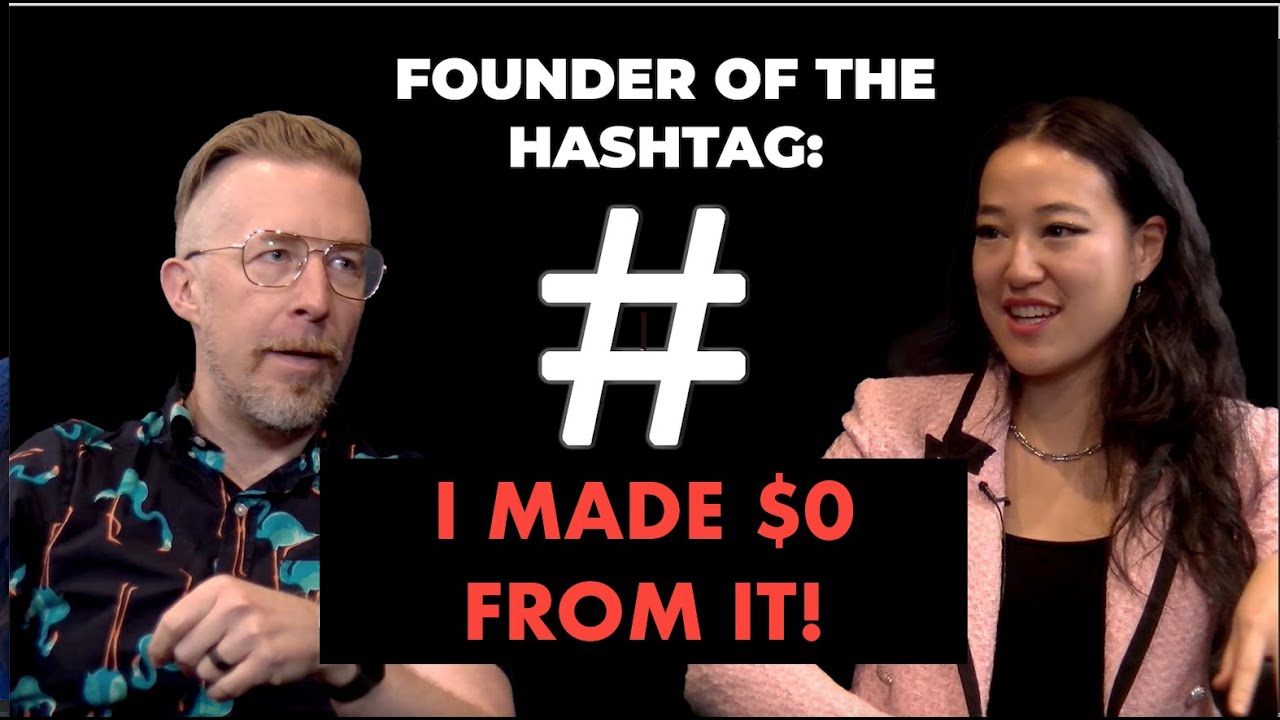
Chris Messina, the technologist who proposed the hashtag on Twitter in 2007, traces how his thinking was shaped by growing up a "social chameleon" in homogenous New Hampshire and discovering the early internet in the mid-90s. He recounts how an arrest as a teenager and the friction of public school made him aware of privilege, power structures, and gatekeepers, and how that drove his work across open source, the Firefox launch, co-working, and decentralized social networking. A recurring thread is timing: he argues the hashtag only worked because of a narrow window when phones, Twitter, and 140-character limits collided.
On the hashtag itself, Messina explains it grew out of a real problem at South by Southwest 2007, borrowing the channel idea from IRC, and had to pass his "drunk test" to stay simple enough for anyone to use. Twitter co-founder Biz Stone dismissed it as too nerdy, and the relationship stayed adversarial through a later trademark fight, yet Messina deliberately never monetized it. He closes on where he sees technology heading, including conversational AI and agents becoming intimate participants in daily life, and on a legacy focused less on inventions than on helping people make better choices about the tools he helped create.
“you're not coming anywhere close to the way that I can destroy my own ideas.”
“the hashtag had to work when I was drunk.”
“I was always like an idiot about money. Like I had like a deep money wound.”
Key takeaways
- 00:13:12Messina argues timing was everything for the hashtag, and proposing it even a year later after the iPhone had spread would likely have made it far less valuable.
- 00:25:56For the Firefox launch he volunteered to design a two-page New York Times ad funded by community micro-donations, putting roughly 10,000 supporters' names into the logo.
- 00:42:09He handles criticism by being his own harshest critic, having already torn his own ideas apart before anyone else can.
- 00:47:17He frames problem-solving as a "complexity balloon" where complexity can be moved but never eliminated, so he chooses which part of the problem to solve for.
- 00:50:45The hashtag came from a real SXSW 2007 problem and borrowed the channel concept from IRC, reusing the pound symbol already on Nokia feature phones.
- 00:56:31When he pitched the idea in person, Twitter co-founder Biz Stone called it stupid and too nerdy to ever work.
- 00:58:42His relationship with Twitter stayed adversarial, including a later fight when the company tried to trademark the hashtag he believed belonged to the open internet.
- 01:01:16He describes a "deep money wound" that led him to contribute the hashtag, Firefox work, and co-working for free rather than monetize them.
Chapters
- 00:00:00Cold open
- 00:03:23Growing up in New Hampshire
- 00:04:54Arrested on the train bridge
- 00:09:18Discovering the early internet
- 00:13:12Why timing was everything
- 00:20:25Moving to San Francisco
- 00:22:19Launching Firefox against Microsoft
- 00:25:56Designing the New York Times ad
- 00:47:17The complexity balloon and drunk test
- 00:48:50Inventing the hashtag at SXSW
- 00:56:12Biz Stone rejects the hashtag
- 00:58:42An adversarial trademark fight
- 01:01:16A deep money wound
- 01:08:27Open source and the generative internet
- 01:13:54The future of conversational AI
- 01:28:29Finding your authentic voice
- 01:47:44On legacy