Microsoft VC: The Biggest Opportunities Exist Between Sci-Fi and Reality - Michael Stewart (M12)
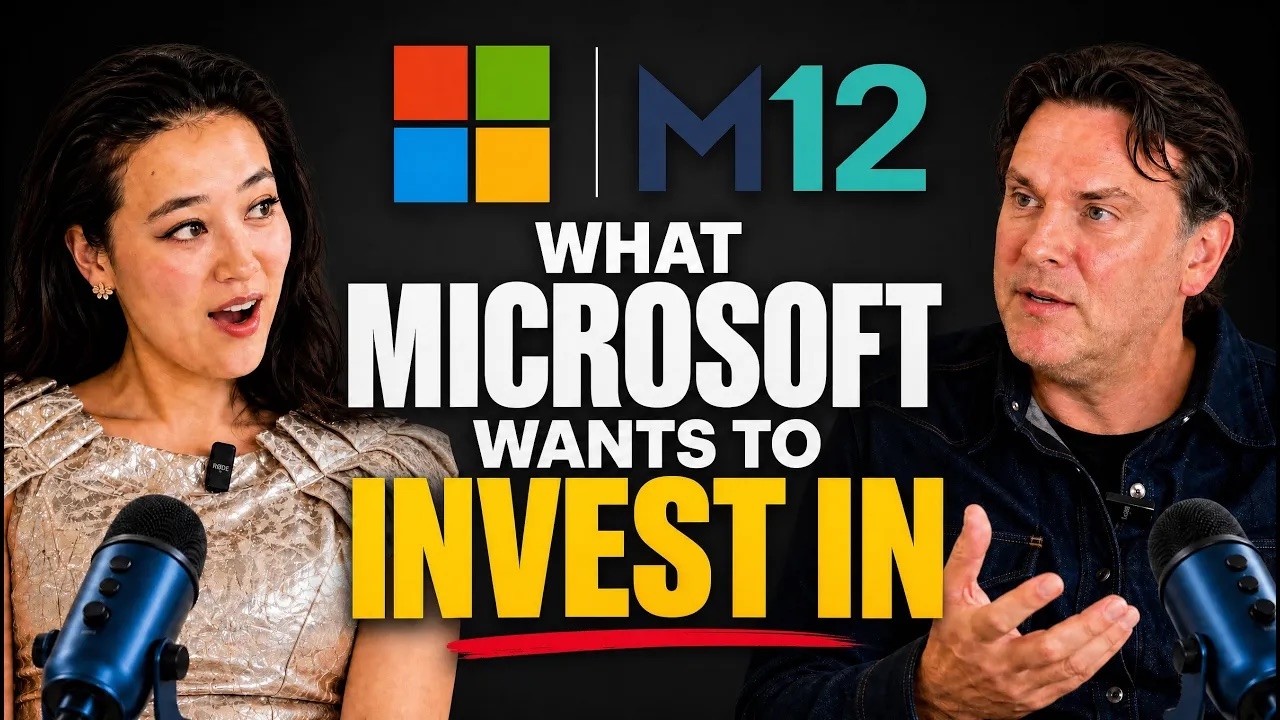
Michael Stewart still calls himself a scientist who happens to invest. A biochemistry undergrad fascinated by prions, he picked up organometallic chemistry in a campus materials lab, turned it into a chemistry PhD, and followed nanomachines into a DARPA program and then Intel Research, where he saw firsthand how far the most far-out ideas sat from the industry's everyday problems. The nanotech boom fed into clean tech; he worked on solar cells, founded a startup that never made it, and was close to giving up when Applied Ventures asked him to rotate into venture. Seven years later a recruiter reached out during his paternity leave, and the M12 offer arrived the day he brought his son home. He walks Melanie Uno through the move from materials he knew deeply to software, where no investor can know everything, how he cuts through the "snow blindness" of near-identical pitches, and why Fastino, backed at pre-seed for small task-specific models, is the closest he has come to an on-the-spot yes.
The second half maps the gaps he is still hunting in: conversational AI that can actually hold a conversation, glasses-free 3D displays that look like a window onto reality, AI that captures the feeling of a great scientific lecture, and games, which he calls one of the most underappreciated places for AI because entertainment has no accuracy bar. He frames M12's thesis as reaching five billion people by driving down cost and widening distribution, credits anime with shaping how technologists picture the future, and is candid about the pressure on the venture model as funds close and startups struggle to exit. He closes with practical advice: founders pitching M12 should bring ideas for how Microsoft could change their trajectory, aspiring VCs should build genuine relationships with technical founders, and he hopes AI can give chemistry and materials science a new way to commercialize, from lab to fab.
“A startup can't just like solve a problem for a $4 trillion company. It's not that simple. But you know there's a gap.”
“Entertainment has no bar. If I'm entertained, I'm entertained.”
“It's the secret to being a great VC isn't just sounding like a VC. Actually, the less you sound like a VC, the better.”
Key takeaways
- 00:10:12His method since the lab has been to take a problem industry is facing and trace the research papers and their references back as far as they go to find where people are stuck.
- 00:19:13In software deals he fights snow blindness, the same problem statement restated dozens of times, by looking for founder velocity, a grasp of how partnerships accelerate a company, and the ability to bring other investors along.
- 00:24:18M12 backed Fastino at pre-seed, unusually early for the fund, because the team was shipping small task-specific models a full year before anyone else he saw.
- 00:25:53A startup cannot simply solve a problem for a $4 trillion company, but it can thrive in the gap between where industry works and what the technology makes possible.
- 00:49:06He sees entertainment and video games as one of the most underappreciated areas for AI: it is already a virtual environment, the distribution exists, and there is no accuracy bar to clear.
- 00:54:04M12's thesis is about reaching five billion people with AI, and he argues the only things standing in the way are cost and distribution.
- 01:13:56Founders pitching M12 should come with ideas for how Microsoft could transform their trajectory; the fund does not ask for a business deal when it invests.
- 01:24:46For early-stage investors, the edge is genuine interest in deeply technical founders, and the less you sound like a VC, the better.