I Sold Twitch For $1B. I Still Wanted More - Justin Kan
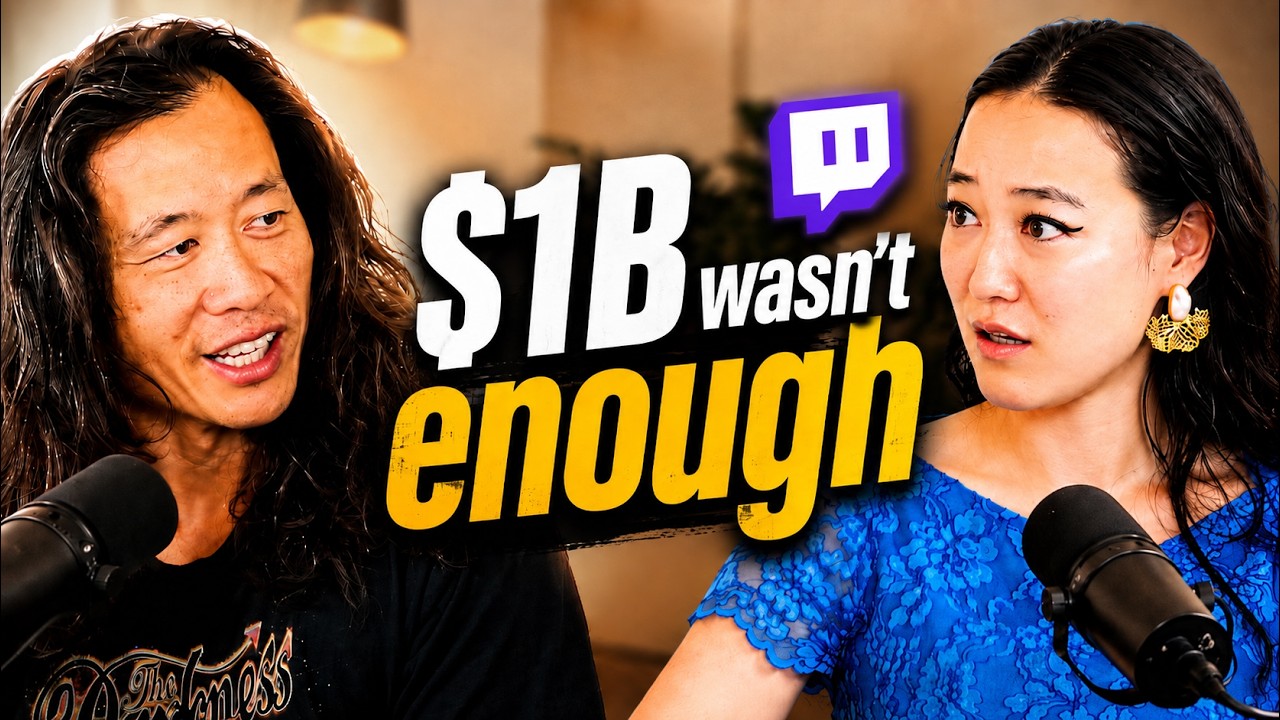
Justin Kan spent years thinking of himself as a programmer and a business guy, not a creative, until Scribd founder Trip Adler told him at a 2009 tech party that he was one of the most creative people he knew. He tells Melanie Uno how that reframed his work: he builds from his own experience, a lesson he took from the founder of Honest Tea at a Yale entrepreneurship club, and treats entrepreneurship as a multidisciplinary craft. Woody's, the non-alcoholic wine he started with winemaker Woody Hambrecht, came out of exactly that. A cripplingly shy kid who found alcohol in high school, he drank heavily from about 15 until he quit cold turkey at 35 or 36, after trying every form of moderation. He describes what replaced it: a therapist's technique of noticing where an emotion sits in the body and staying with it until it passes, and the realization that he could dance, socialize, and get through hard moments without medicating himself.
The second half traces where that came from and where it led. His mother, who emigrated from rural Malaysia at 17 and became a programmer at Digital Equipment Corp, passed on both her gift for rallying people and a scarcity mindset, which is why selling Twitch still left him wanting more next to friends who built Airbnb and Dropbox. He talks about trading that for an abundance mindset, chasing approval through success until he saw it could never fill the gap, and the moments, first in an ayahuasca ceremony and later after breaking both elbows in a bicycle accident, when he understood he was the observer of his experience rather than the experience itself. He explains Titanic's End, the 70-foot LED iceberg art car a group of artists and engineers built for Burning Man 2022, as a third-place community for a few hundred people, and closes on training confidence and risk through repetition, his interest in physical companies like Zipline as the cost of software falls toward zero, and the video he records every year for his friends and family.
“When I sold Twitch, I was like, oh, we, you know, well, I did good, but like my friends started Airbnb or Dropbox or something, I didn't do that good.”
“I am fine in that I can survive anything. I'm a strong person.”
“I feel like the cost of creating software is going to zero.”
Key takeaways
- 00:03:42Founders draw ideas for companies from their own experience, a lesson he took from the founder of Honest Tea at a Yale entrepreneurship club and has built around ever since.
- 00:07:02Woody's started because every non-alcoholic wine he could find was too sweet; he talked the idea through with people until he met a winemaker who could make a good one.
- 00:15:17A therapist taught him to notice what guilt feels like in the body and sit with it; emotions he stopped stuffing down dissipated, and the same practice carried him through quitting alcohol.
- 00:21:32To become a different kind of person, set goals on inputs, not outputs: commit to running three times a week rather than to finishing a marathon.
- 00:23:32He sees his appetite for risk as part genetic and part trained, since years as an entrepreneur skewed his sense of which risks are worth taking.
- 00:34:21Having grown up looking to parents and peers for approval, he wants his own kids to be kind to themselves and the source of their own approval.
- 00:42:00Titanic's End works as a third-place community: people want the mission and belonging that clubs and churches once gave them, and anyone can join by showing up and doing the work.